


Building muscle requires more than simply spending hours in the gym. Your body needs a clear reason to adapt, and that reason comes from gradually increasing the demands placed on your muscles. This principle is known as progressive overload. A well-designed thespoonathletic workout approach can use progressive overload to make training more structured, measurable, and productive.
Whether you are a beginner learning the basics or an experienced lifter trying to overcome a plateau, the goal remains similar: train consistently, recover properly, and gradually challenge your muscles. You do not need to increase the weight every workout. Adding repetitions, improving technique, increasing training volume, or reducing unnecessary rest can also create progression. The key is making small, sustainable improvements rather than chasing dramatic changes every session.
What Is Progressive Overload?
Progressive overload means gradually increasing the training stimulus over time so your muscles have a reason to become stronger and larger. When you repeatedly perform the same exercise with the same weight, repetitions, and effort, your body eventually becomes efficient at handling that workload. Progression introduces a new challenge.
For example, suppose you perform three sets of barbell squats with 60 kg for eight repetitions. After several weeks, you may be able to complete three sets of ten repetitions with the same weight. Eventually, you could increase the load slightly and return to eight repetitions. This creates a continuing cycle of adaptation and improvement.
A practical thespoonathletic workout plan should therefore focus on measurable progress instead of simply completing exercises. Keep track of your weights, repetitions, sets, and overall performance. This makes it easier to recognize genuine improvement and identify when your routine needs adjustment.
How Progressive Overload Builds Muscle
Resistance training creates a stimulus that challenges muscle tissue. Your body responds by repairing and adapting to that stress. With sufficient nutrition and recovery, repeated training can support increases in muscle size and strength.
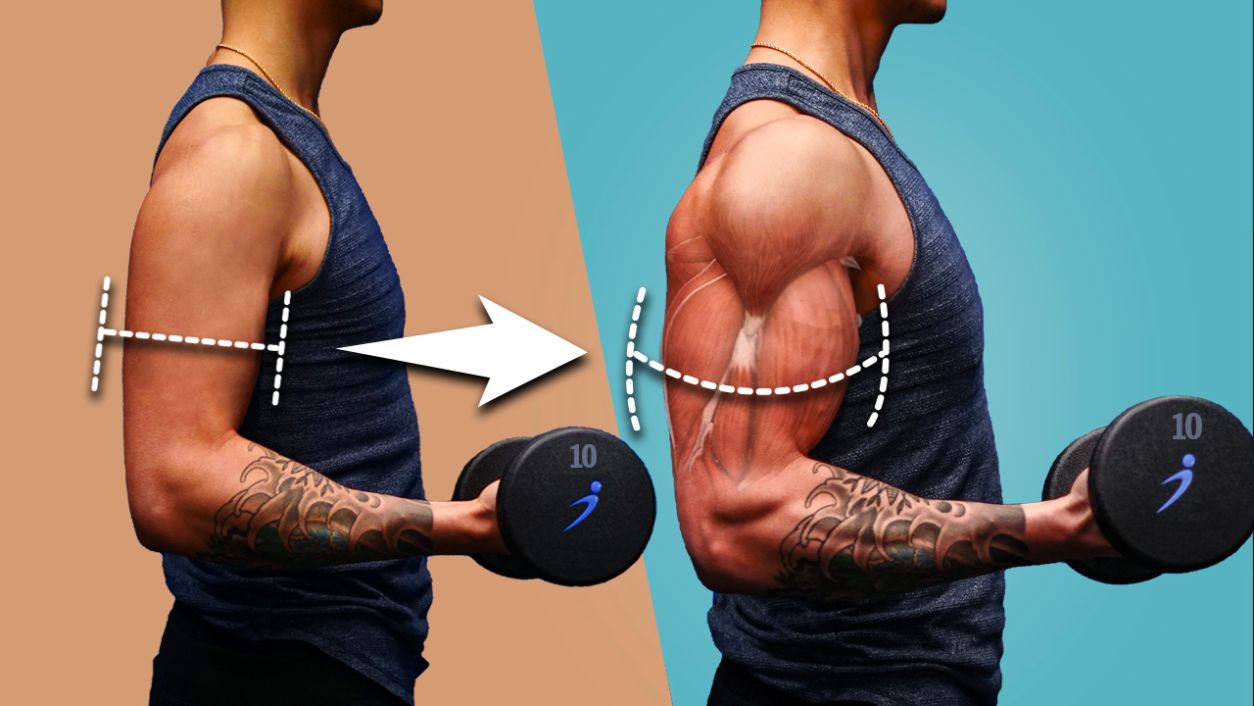
Progression matters because muscles need increasingly challenging work as they adapt. However, overload does not mean pushing to failure on every set or adding large amounts of weight every week. Excessive increases can compromise technique and increase unnecessary fatigue.
Effective progression can come from several variables:
- Increasing resistance gradually
- Performing more repetitions with the same weight
- Adding an additional working set
- Improving exercise technique and range of motion
- Increasing training frequency when appropriate
- Managing rest periods intelligently
- Using more controlled repetitions
The best approach depends on your experience, exercise selection, recovery capacity, and training goals.
A Simple Weekly Muscle-Building Workout Plan
A four-day schedule can provide a useful balance between training stimulus and recovery. The following structure divides major muscle groups while allowing adequate rest between demanding sessions.
| Day | Training Focus | Example Exercises |
|---|---|---|
| Monday | Chest, Shoulders, Triceps | Bench press, overhead press, lateral raises, triceps extensions |
| Tuesday | Back, Biceps | Rows, pulldowns, pull-ups, curls |
| Wednesday | Recovery | Walking, mobility, light activity |
| Thursday | Legs | Squats, Romanian deadlifts, lunges, calf raises |
| Friday | Upper Body | Incline press, seated row, shoulder press, curls |
| Saturday | Recovery/Light Activity | Mobility, walking, stretching |
| Sunday | Rest | Complete recovery |
This structure is flexible rather than mandatory. Beginners may benefit from fewer training days, while advanced lifters can use more specialized routines. The important factor is selecting a schedule that you can consistently maintain.
Monday: Chest, Shoulders and Triceps
Start the week with pressing movements that train several upper-body muscles simultaneously. The bench press can serve as the primary strength-focused exercise, followed by an overhead press for the shoulders.
A sample session could include three to four working sets of the main compound movements, followed by moderate-volume isolation exercises. Lateral raises can target the side deltoids, while triceps extensions provide additional arm-focused work.
Choose weights that allow you to maintain controlled technique throughout the target repetition range. If your form deteriorates significantly, the load is probably too heavy. In a thespoonathletic workout routine, quality repetitions should take priority over impressive numbers.
Tuesday: Back and Biceps
Back training benefits from a combination of vertical pulling and horizontal rowing. Lat pulldowns or assisted pull-ups can emphasize the upper back and lat muscles, while rows provide a different movement pattern.
Finish with one or two biceps exercises, such as dumbbell curls or hammer curls. Rather than swinging the weights, control both the lifting and lowering portions.
Track your performance from week to week. If you can complete the upper end of your chosen repetition range with strong technique, consider making a small increase in resistance during the next session.
Thursday: Lower-Body Strength
Lower-body training should involve exercises that challenge the quadriceps, hamstrings, glutes, and calves. Squats can provide a major compound movement, while Romanian deadlifts emphasize the posterior chain.
Lunges or split squats can add unilateral training, helping develop coordination and address strength differences between legs. Calf raises can finish the session.
Because lower-body compound exercises can generate considerable fatigue, progression should be conservative. Adding a small amount of weight while maintaining proper depth and control is more valuable than forcing a large increase that damages technique.
Friday: Upper-Body Progression
The final training day can revisit the upper body using different exercises or repetition ranges. For example, an incline dumbbell press can replace the flat barbell bench press, while a seated cable row can provide a controlled rowing movement.
This session can also emphasize muscles that need additional attention. If shoulders or arms are a priority, include moderate-volume accessory exercises.
The thespoonathletic approach should remain adaptable. If performance declines throughout the week because of accumulated fatigue, reducing volume may be more beneficial than adding extra exercises.
How to Progress Your Workouts
One of the easiest methods for beginners is double progression. Choose a repetition range, such as 8–12 repetitions. Start with a weight that allows you to perform approximately eight quality repetitions. Over subsequent sessions, gradually work toward twelve repetitions.
Once you can complete all prescribed sets at the top of the range with solid form, increase the resistance slightly. Your repetitions may drop back toward the lower end of the range, and the cycle begins again.
For example:
Week 1: 20 kg × 8 repetitions
Week 2: 20 kg × 9 repetitions
Week 3: 20 kg × 10 repetitions
Week 4: 20 kg × 12 repetitions
Week 5: 22 kg × 8 repetitions
This method provides an objective way to progress without forcing weight increases every workout.
Use Training Logs to Measure Progress
A training log can transform a random gym routine into a structured program. Record the exercise, weight, sets, repetitions, and any useful observations after every workout.
You can also record factors such as energy levels and perceived difficulty. If an exercise suddenly feels much harder than usual, poor sleep, insufficient recovery, or accumulated fatigue could be influencing performance.
Over several months, these records create a clear picture of your progress. Instead of relying on memory, you can identify which exercises are improving and where adjustments may be necessary.
Nutrition Supports Muscle Growth
Training provides the stimulus, but nutrition supplies many of the resources required for recovery and adaptation. A balanced diet should provide adequate protein, carbohydrates, healthy fats, vitamins, minerals, and fluids.

Protein-rich foods can include eggs, dairy products, lean meats, fish, beans, lentils, tofu, and other suitable options. Carbohydrates can support training performance, while dietary fats contribute to overall nutritional balance.
Total calorie intake also matters. Building muscle generally becomes easier when your body has sufficient energy available, although individual calorie needs vary. The thespoonathletic workout strategy should therefore be paired with sensible eating rather than an extreme diet.
Recovery Is Part of the Program
Muscle growth does not happen only while you are lifting weights. Recovery between sessions is essential. Aim for consistent sleep, adequate nutrition, hydration, and sensible training volume.
Avoid treating rest days as wasted time. A recovery day can help prepare your body for the next demanding workout. Light walking or mobility work may be useful when appropriate, but recovery activities should not create additional exhaustion.
If your strength repeatedly decreases, soreness remains unusually high, or motivation drops for an extended period, your training workload may need adjustment.
Common Progressive Overload Mistakes
Progressive overload works best when progression is controlled. Several common mistakes can slow results.
Adding weight too quickly: Large jumps can reduce technique quality and make exercises unnecessarily difficult.
Ignoring repetitions: Strength progression is not only about adding plates. More controlled repetitions can represent meaningful improvement.
Changing exercises constantly: Frequent changes make it harder to compare performance and measure progression.
Training without recovery: More sessions are not automatically better. Muscles need time to recover.
Neglecting technique: A heavier weight is not useful if the movement becomes uncontrolled or shifts stress away from the intended muscles.
How to Know When to Adjust Your Plan
A workout plan should evolve as your body adapts. If you are consistently reaching the top of your repetition range, it may be time to increase resistance. If progress stalls for several weeks, examine sleep, nutrition, exercise technique, training volume, and recovery before immediately adding more work.
Sometimes the best adjustment is actually a reduction in volume. A lighter training week can help manage accumulated fatigue and allow you to return with better performance.
The thespoonathletic training philosophy should therefore emphasize long-term consistency rather than short-term intensity. Sustainable progression is easier to maintain and generally more productive than repeatedly pushing beyond your recovery capacity.
Conclusion
A successful muscle-building routine is built on patience, consistency, and measurable progression. Progressive overload gives your workouts direction by ensuring that your muscles continue to face an appropriate challenge. You can progress through additional repetitions, slightly heavier resistance, improved technique, increased volume, or better training control. The most effective thespoonathletic workout plan is not necessarily the most complicated one. It is the plan you can perform consistently while maintaining good form, eating adequately, and recovering between sessions. Track your workouts, make small changes, and give your body enough time to adapt. With a structured approach and realistic expectations, progressive overload can turn ordinary strength sessions into a sustainable muscle-building system. Focus on gradual improvements rather than overnight results, and let months of consistent training produce the transformation you are working toward.