

.jpg "Core Workouts for Women thespoonathletic Reveals Moves for Stability and Everyday Strength")
A strong core is about much more than achieving defined abdominal muscles. The muscles surrounding the abdomen, pelvis, lower back, hips, and trunk work together to stabilize the body during almost every movement. From carrying groceries and climbing stairs to sitting at a desk and exercising, core strength supports everyday physical performance. For women, developing a stable midsection can also make workouts feel more controlled and efficient. thespoonathletic emphasizes practical movement patterns that build strength without making training unnecessarily complicated. The goal is to create a core that can resist unwanted movement, transfer force efficiently, and help maintain good posture. Instead of focusing exclusively on crunches, an effective routine should train several functions of the core, including bracing, rotation control, balance, and stabilization. With consistent practice, these exercises can become an important part of a balanced fitness routine.
The Core Muscles You Need to Train
The core consists of several interconnected muscle groups rather than a single muscle. The rectus abdominis is involved in trunk flexion, while the deeper transverse abdominis contributes to abdominal stability. The internal and external obliques help control rotation and side-to-side movement. Muscles around the hips, pelvis, and lower back also contribute to overall trunk stability.
Understanding these functions can help women select exercises that develop useful strength instead of simply creating fatigue. A well-rounded core workout should include movements that challenge the body to stabilize while the arms or legs move. This approach can improve coordination and make strength gains more transferable to everyday activities.
Important core functions include:
- Bracing: Keeping the trunk firm during movement.
- Anti-extension: Preventing excessive arching of the lower back.
- Anti-rotation: Resisting unwanted twisting.
- Lateral stability: Controlling side-to-side movement.
- Dynamic control: Maintaining stability while the limbs move.
How Core Workouts Support Everyday Strength
Core training becomes especially valuable when it resembles the movements people perform outside the gym. Picking up a box, reaching into a cabinet, carrying a bag, or getting up from the floor requires the trunk to remain stable while other parts of the body move. Training this ability can improve movement awareness and overall physical confidence.
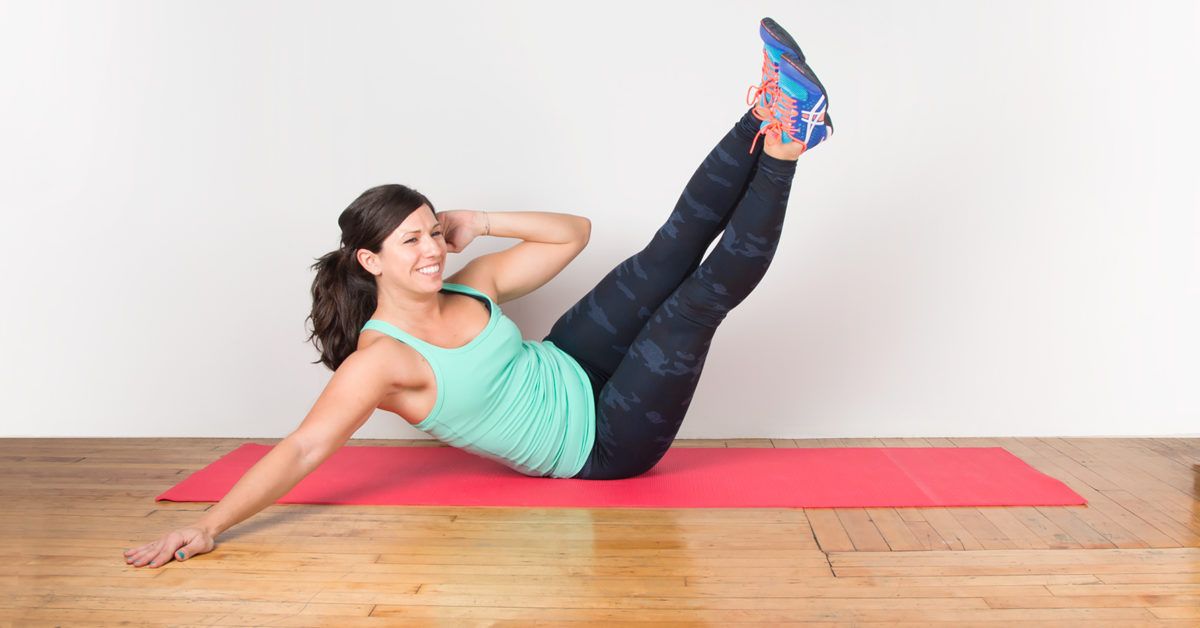
thespoonathletic promotes the idea that core training should complement the rest of a fitness program rather than exist separately from it. Exercises such as dead bugs, bird dogs, planks, and carries can challenge the abdominal muscles while also requiring coordination between the shoulders, hips, and spine.
A strong core may help you:
- Maintain better posture during prolonged sitting.
- Control body position during strength exercises.
- Improve balance and coordination.
- Transfer force more effectively between the upper and lower body.
- Perform daily lifting and carrying tasks with greater control.
Dead Bug for Controlled Core Stability
The dead bug is one of the most useful beginner-friendly core exercises because it teaches controlled movement while the torso remains stable. Lie on your back with your knees bent at approximately 90 degrees and your arms extended toward the ceiling. Brace your abdomen gently, then slowly extend one leg and the opposite arm without allowing your lower back to excessively arch away from the floor. Return to the starting position and alternate sides.
The exercise may look simple, but performing it slowly makes a major difference. The objective is not to move the limbs as far as possible. Instead, concentrate on keeping your rib cage and pelvis controlled throughout every repetition.
Try 6–10 repetitions per side for two or three sets. If maintaining control becomes difficult, reduce the range of motion rather than rushing through the movement.
Bird Dog for Balance and Coordination
Bird dogs combine core stability with balance and controlled limb movement. Begin on your hands and knees with your hands beneath your shoulders and your knees beneath your hips. Brace your midsection, then extend one arm and the opposite leg. Hold briefly before returning both limbs to the starting position.
Avoid lifting the leg excessively high or rotating your hips toward one side. Your body should remain relatively stable throughout the movement. This makes the exercise particularly useful for developing awareness of how the trunk behaves while the arms and legs move independently.
thespoonathletic recommends thinking about quality rather than speed when performing stability-focused exercises. A slow bird dog can be more challenging than a fast one because it requires greater control. Start with 6–8 repetitions per side and gradually increase the number as your technique improves.
Plank Variations for Full-Body Stability
Planks are a classic core exercise because they require the abdominal muscles, shoulders, hips, and legs to work together. A basic forearm plank can be performed by placing the elbows beneath the shoulders and extending the legs behind you. Keep the body in a relatively straight line while maintaining steady breathing.
Once the standard plank becomes comfortable, you can introduce variations to provide a new challenge. Side planks emphasize lateral stability, while elevated planks can make the exercise more accessible for beginners.
Useful variations include:
- Forearm plank
- High plank
- Side plank
- Knee-supported plank
- Shoulder-tap plank
- Elevated plank
Instead of holding a plank for several minutes, focus on maintaining excellent positioning for shorter periods. Three sets of 20–40 seconds can be enough for many people, particularly when the exercise is combined with other core movements.
Glute Bridge With Abdominal Bracing
The glute bridge is often considered a lower-body exercise, but it also provides an excellent opportunity to practice core control. Lie on your back with your feet flat and knees bent. Tighten your abdomen gently, press through your feet, and raise your hips until your torso forms a comfortable line with your thighs.
Avoid pushing the hips excessively high or allowing the ribs to flare. The movement should come primarily from the hips rather than from excessive lower-back extension.
Strong glutes and a stable trunk work together during activities such as climbing stairs, standing up, and lifting objects. Adding glute bridges to a core routine therefore creates a useful connection between abdominal stability and lower-body strength.
Side Plank for Lateral Strength
Many traditional abdominal exercises focus on forward-and-backward movement, but the body also needs to resist side-to-side forces. The side plank addresses this important function by challenging the muscles along the sides of the trunk.
Start on one forearm with your legs extended or your knees bent for an easier variation. Lift your hips while keeping your torso aligned. Hold the position while breathing normally, then switch sides.
If a full side plank is too difficult, place the bottom knee on the floor. As strength improves, gradually increase the duration or progress toward a straight-leg version.
Lateral stability is useful when carrying a bag on one side, walking over uneven surfaces, or changing direction during sports and recreational activities.
Suitcase Carry for Functional Core Strength
A suitcase carry is an excellent example of functional core training. Hold a moderately challenging weight in one hand and walk while resisting the tendency to lean toward the weighted side. Keep your shoulders relatively level and your torso upright.
The exercise trains anti-lateral-flexion strength, meaning the core works to prevent unwanted side bending. It also challenges grip strength, posture, and coordination.
For beginners, walk for approximately 20–30 seconds on one side before switching hands. Perform two or three rounds per side. Choose a weight that challenges you without forcing your posture to collapse.
This exercise demonstrates why core training does not always need to happen on a mat. Real-life strength often involves stabilizing the body while carrying or moving something.
A Simple Core Workout Structure
A balanced session does not need dozens of exercises. Four or five carefully selected movements can provide a comprehensive workout when performed with appropriate technique.
| Exercise | Main Focus | Suggested Sets | Repetitions/Time |
|---|---|---|---|
| Dead Bug | Anti-extension | 2–3 | 6–10/side |
| Bird Dog | Balance and stability | 2–3 | 6–8/side |
| Forearm Plank | Total core stability | 2–3 | 20–40 sec |
| Side Plank | Lateral stability | 2–3 | 15–30 sec/side |
| Suitcase Carry | Functional stability | 2–3 | 20–30 sec/side |
Perform the exercises in a circuit or complete all sets of one exercise before moving to the next. Rest approximately 30–60 seconds between sets, adjusting the recovery period according to your fitness level.
How to Make Core Training More Effective
Technique should come before intensity. Adding repetitions or holding an exercise for longer is not useful if your posture deteriorates halfway through the set. Focus on controlled breathing and maintaining a stable trunk.
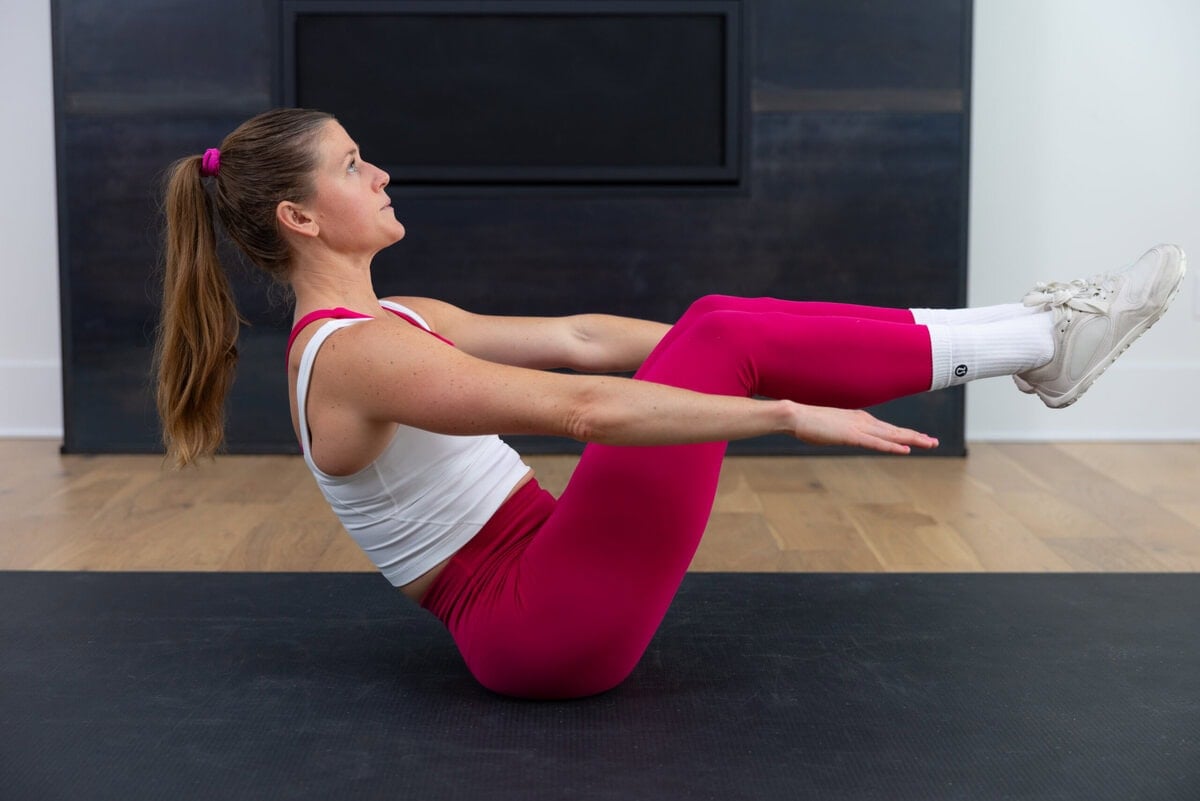
thespoonathletic encourages a progression-based approach to strength training. Once an exercise becomes easy, make one small change rather than dramatically increasing the workload. You might add a few seconds to a plank, increase repetitions slightly, introduce a harder variation, or use a modest amount of resistance.
Keep these principles in mind:
- Move slowly enough to control every repetition.
- Keep your breathing steady.
- Stop a set when technique begins to break down.
- Progress gradually rather than chasing exhaustion.
- Train the entire body instead of focusing only on the abdomen.
- Allow adequate recovery between demanding sessions.
Common Core Training Mistakes to Avoid
One common mistake is assuming that more repetitions automatically produce better results. Performing dozens of rushed crunches may create fatigue without teaching the trunk to stabilize effectively. Another issue is holding the breath during difficult movements. Controlled breathing can help maintain appropriate tension without creating unnecessary strain.
Some people also train their core every day because they believe frequent exercise produces faster results. The core is involved in many other workouts, so recovery still matters. Two or three focused sessions per week can be enough when they are combined with full-body strength training and regular physical activity.
Avoid treating discomfort as proof of effectiveness. Muscle fatigue is normal, but sharp, sudden, or unusual pain is a reason to stop the exercise and reassess your technique.
Building a Sustainable Core Routine
Consistency matters more than having an elaborate workout plan. A short routine performed regularly can produce better long-term results than an intense session that is abandoned after a few weeks. Women with different fitness levels can adjust repetitions, exercise variations, resistance, and rest periods according to their abilities.
A practical weekly approach might include two dedicated core sessions alongside regular strength or cardio workouts. You can also incorporate individual exercises into other training sessions. For example, dead bugs can be used during a warm-up, while suitcase carries can be included near the end of a strength workout.
The objective is to make core training sustainable. When exercises fit naturally into your schedule, maintaining the habit becomes easier and progress becomes more consistent.
Progressing From Beginner to Advanced
Progress should be based on control rather than simply choosing the hardest-looking exercise. Beginners can start with supported variations, shorter holds, and fewer repetitions. Intermediate trainees can add resistance, longer sets, or more demanding movement patterns.
Advanced exercisers might introduce loaded carries, dynamic planks, rotational control exercises, or movements that require simultaneous upper- and lower-body coordination.
A simple progression model is:
- Learn the movement: Prioritize positioning and breathing.
- Build control: Increase repetitions or holding time modestly.
- Increase challenge: Add resistance or a more difficult variation.
- Integrate movement: Combine stability with functional exercises.
- Maintain quality: Never sacrifice technique simply to increase difficulty.
This approach helps turn core training into a long-term strength skill rather than a temporary fitness challenge.
Conclusion
Effective core workouts for women should focus on more than appearance. A capable core helps the body remain stable, coordinated, and controlled while performing everyday movements and exercise. Dead bugs, bird dogs, planks, glute bridges, side planks, and suitcase carries provide different ways to develop these qualities without requiring complicated equipment. The most valuable routine is one that you can perform consistently and progress gradually. Focus on controlled repetitions, steady breathing, balanced training, and functional movement rather than chasing exhaustion. thespoonathletic highlights the importance of developing practical strength that carries over into real-life activities. With patience and regular practice, core training can become a powerful foundation for better balance, improved movement control, and greater everyday confidence.

.jpg&description=Discover effective core workouts for women that improve stability, posture, balance, and everyday functional strength.)