


Balance and coordination are essential movement skills for athletes, active adults, and anyone who wants to move with greater confidence. Balance allows the body to remain stable while standing, changing direction, landing, or shifting weight. Coordination helps different parts of the body work together smoothly and efficiently. When these abilities improve, movements become more controlled, reactions become quicker, and physical activities often feel easier.
A well-designed training routine does not need complicated equipment or advanced techniques. Simple movements such as single-leg exercises, lateral steps, controlled jumps, and reaction drills can challenge the nervous system while strengthening the muscles responsible for stability. thespoonathletic athletic drills can be incorporated into warm-ups, conditioning sessions, or dedicated coordination workouts. The key is consistency, proper technique, and gradual progression rather than simply performing movements at maximum speed.
Why Balance and Coordination Matter
Balance and coordination work together to create efficient movement. Good balance helps maintain body position, while coordination determines how effectively the arms, legs, eyes, and core respond to a movement task. Athletes depend on these abilities when sprinting, jumping, throwing, catching, cutting, or changing direction. Even outside sports, they contribute to everyday activities such as climbing stairs, carrying objects, walking on uneven surfaces, and recovering from an unexpected change in footing.
Training these qualities can also improve body awareness. As you practice controlled movements, you become more familiar with where your body is positioned and how it responds to different challenges. This awareness can help you recognize inefficient movement patterns and make adjustments. Instead of treating balance as something that can only be trained by standing on one foot, think of it as a complete movement skill involving strength, posture, visual awareness, reaction time, and control.
Build a Strong Foundation Before Increasing Difficulty
Effective balance training begins with basic stability. Before attempting fast or complex drills, learn to control your body during simple movements. A stable foundation allows you to progress without sacrificing technique.
Start with exercises that encourage controlled weight transfer. For example, stand on one leg while keeping the hips level and the torso upright. Once comfortable, introduce small movements of the arms or the free leg. You can also practice slow bodyweight squats while concentrating on keeping both feet firmly connected to the floor.
Focus on:
- Maintaining controlled posture
- Keeping movements smooth rather than rushed
- Engaging the core during challenging positions
- Maintaining steady breathing
- Using a stable surface when learning a new exercise
- Increasing difficulty only after mastering the basic version
thespoonathletic training principles can be applied by treating every repetition as an opportunity to improve movement quality. Stability should come before speed, and control should come before complexity.
Single-Leg Drills for Stability and Control
Single-leg exercises are among the most practical ways to challenge balance. When one foot leaves the ground, the body must make constant adjustments to remain stable. These adjustments involve the ankles, knees, hips, core, and upper body.
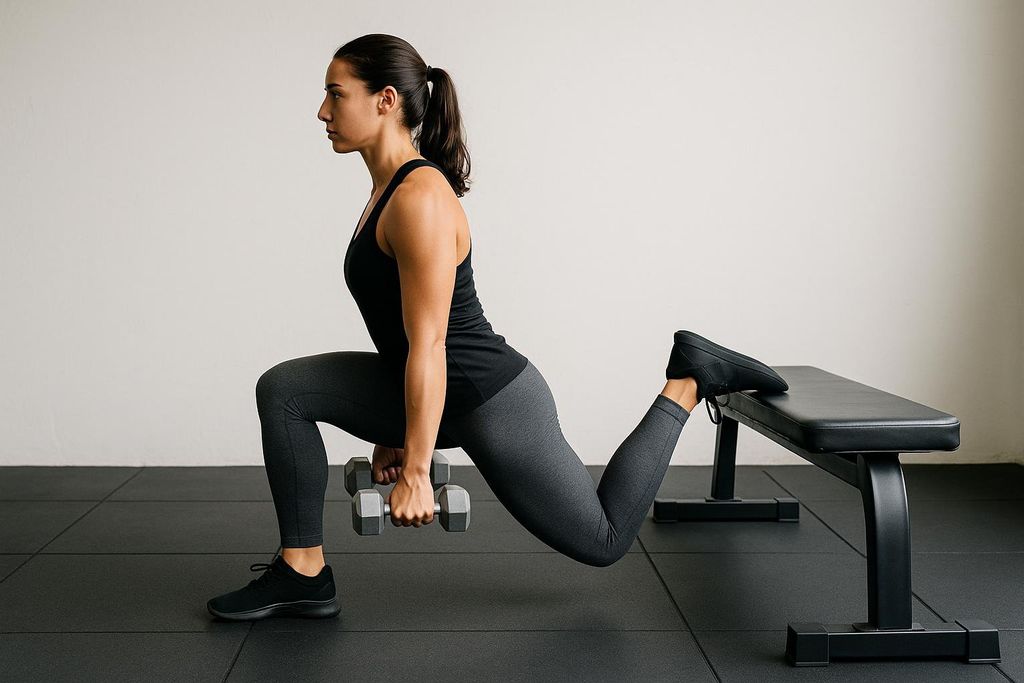
Try a single-leg reach drill by standing tall on one foot and slowly reaching the opposite leg backward. Keep your supporting knee slightly bent and your hips square. Return to the starting position without allowing your body to wobble excessively. Perform several controlled repetitions before switching sides.
Another option is the single-leg knee drive. Balance on one foot, lift the opposite knee toward your chest, pause briefly, and then lower it with control. Once the movement becomes comfortable, add an arm movement or perform it at a slightly faster tempo.
These drills can help develop:
- Lower-body stability
- Hip control
- Ankle awareness
- Core engagement
- Weight-transfer ability
- Postural control
Quality matters more than the number of repetitions. A slow, precise movement is often more valuable than repeatedly rushing through an unstable position.
Lateral Movement Drills for Better Coordination
Many sports require athletes to move sideways rather than simply forward and backward. Lateral drills challenge coordination because the body must quickly shift its center of gravity while maintaining control.
A simple lateral shuffle is an excellent starting point. Stand with your feet approximately shoulder-width apart, bend your knees slightly, and move sideways using short, controlled steps. Avoid crossing your feet. After several steps in one direction, reverse the movement.
You can make the drill more challenging by placing markers on the floor and changing the distance between them. Begin slowly, then increase speed while maintaining proper body position. Another variation is the lateral step-and-stick drill. Step quickly to the side and then stop under control, holding the landing position for a moment before moving again.
These movements teach the body to absorb momentum, stabilize quickly, and transition smoothly between directions.
Agility Drills That Combine Speed and Balance
Agility training becomes more effective when speed is combined with controlled deceleration. Moving quickly is only one part of athletic performance. The ability to slow down, stabilize, and change direction is equally important.
A simple four-point movement drill can be performed using four floor markers. Move forward to the first point, shuffle sideways to the second, move backward to the third, and then return to the starting position. Keep your movements deliberate at first. As your coordination improves, gradually increase the pace.
Another useful exercise is the forward-and-back reaction drill. Start in an athletic stance and move forward for several steps before quickly returning backward. Keep the torso controlled and avoid taking excessively long strides.
When practicing agility, remember:
- Stay light on your feet.
- Keep your knees comfortably bent.
- Use short steps during direction changes.
- Lower your center of gravity before stopping.
- Keep your eyes focused on the movement path.
- Prioritize accurate foot placement over maximum speed.
The goal is to make quick movements without losing control.
Jump-and-Land Exercises for Dynamic Balance
Balance is not limited to stationary positions. Dynamic balance becomes especially important when the body leaves the ground and returns to the floor. Jump-and-land exercises can teach you how to control force during landing.
Begin with a small vertical jump. Swing your arms naturally, leave the floor, and land softly with your knees slightly bent. Hold the landing position for two or three seconds. Pay attention to whether your knees remain aligned with your feet and whether your weight is distributed evenly.
Once the basic landing is comfortable, try a small forward jump followed by a controlled stop. You can eventually progress to side-to-side jumps, provided you can maintain proper technique.
The landing phase deserves as much attention as the jump itself. A controlled landing teaches the body to manage momentum and establish stability quickly. If your landing becomes noisy, unstable, or poorly aligned, reduce the jump distance or height until you regain control.
Hand-Eye and Foot-Eye Coordination Training
Coordination improves when the brain must process information and quickly organize a physical response. Simple reaction activities can make a workout more engaging while challenging timing and accuracy.
For example, bounce a ball against a wall and catch it with alternating hands. Start close to the wall and use a predictable rhythm. As your skill improves, step farther away or change the catching pattern. You can also dribble a ball while walking through a series of markers, forcing your eyes, hands, and feet to work together.
Another option involves partner-based directional cues. A partner can point left, right, forward, or backward while you respond with the appropriate movement. If training alone, predetermined sequences can provide a similar challenge.
These activities demonstrate an important principle of thespoonathletic athletic training: coordination can be developed by combining physical movement with attention, timing, and decision-making.
A Simple Balance and Coordination Training Plan
A structured routine makes it easier to practice consistently. You do not need a long session. A focused 20- to 30-minute workout can provide a useful coordination challenge when performed regularly.
| Drill | Duration/Reps | Primary Focus | Difficulty |
|---|---|---|---|
| Single-leg balance | 20–30 sec/side | Stability | Beginner |
| Single-leg reach | 6–10/side | Hip control | Beginner |
| Lateral shuffle | 20–30 sec | Footwork | Beginner–Intermediate |
| Forward-back movement | 20–30 sec | Direction changes | Intermediate |
| Jump and stick | 6–8 reps | Landing control | Intermediate |
| Ball reaction drill | 30–45 sec | Hand-eye coordination | Intermediate |
| Multi-direction agility | 20–30 sec | Full-body coordination | Advanced |
Begin with one or two rounds and take enough recovery time to maintain technique. Over several weeks, increase repetitions, movement complexity, or speed rather than changing everything at once.
Progressive Ways to Make Drills More Challenging
Progression keeps training productive. Once a basic exercise becomes easy, introduce one new challenge at a time. You might increase movement speed, extend the working period, reduce rest, or add a decision-making element.

For example, a single-leg balance drill can progress from standing still to reaching in different directions. A lateral shuffle can progress from a predictable pattern to a reaction-based movement. A basic jump can progress to a directional jump followed by a controlled landing.
You can also alter visual demands carefully. Performing certain balance exercises while looking at a fixed point can challenge concentration, while more advanced variations may involve responding to an external cue. However, safety should always come first.
A useful progression model is:
- Learn the movement.
- Control the movement.
- Increase repetition or duration.
- Add speed.
- Add direction changes.
- Introduce reaction or decision-making.
- Combine several skills.
This approach helps prevent unnecessary difficulty from compromising technique.
Common Mistakes to Avoid
Balance and coordination training can lose its value when exercises are performed carelessly. One common mistake is prioritizing speed before mastering the movement. Fast repetitions may look impressive, but poor foot placement or uncontrolled landings can reduce the quality of training.
Another mistake is training only one side of the body. Differences between the left and right sides are normal, but both sides should receive appropriate practice. You should also avoid turning every session into an exhausting workout. Coordination depends on concentration, and extreme fatigue can make precise movement difficult.
Avoid:
- Rushing through balance exercises
- Ignoring poor landing mechanics
- Using excessive resistance too early
- Training only the dominant side
- Skipping warm-ups
- Treating instability as a sign of effective training
- Increasing difficulty too rapidly
The objective is not to make every exercise as difficult as possible. It is to create a manageable challenge that encourages better movement.
How Consistency Improves Movement Quality
Balance and coordination develop through repeated practice. A single workout can introduce useful movement patterns, but regular training gives the nervous system more opportunities to refine them. Short sessions performed several times a week may be easier to maintain than occasional, exhausting workouts.
Keep a simple training record. Note which exercises you performed, how long you trained, and which movements felt difficult. Over time, you may notice that you can hold positions longer, change directions more confidently, or perform movements with less unnecessary motion.
Recovery also matters. Muscles and the nervous system need adequate rest between challenging sessions. Combining coordination work with sensible strength training, mobility exercises, and general physical activity can create a more balanced fitness routine.
Conclusion
Balance and coordination are fundamental athletic abilities that influence almost every type of movement. From single-leg stability to rapid direction changes, these skills help the body respond efficiently and remain controlled under changing demands. The best results come from thoughtful progression, consistent practice, and attention to technique. thespoonathletic athletic drills can serve as a useful framework for building movement confidence through exercises involving stability, agility, reaction, landing control, and coordination. Start with manageable movements, master the basics, and gradually introduce greater speed and complexity. Whether your goal is better sports performance, improved fitness, or simply more confident everyday movement, developing balance and coordination is a practical investment. Train patiently, focus on quality, and let control become the foundation for faster, stronger, and more efficient movement.