


Reaction time is the ability to recognize a stimulus and respond to it quickly and accurately. In sports, this skill can determine whether an athlete reaches the ball, avoids an opponent, catches a pass, or changes direction before losing balance. While natural reflexes play a role, reaction speed can also be developed through consistent and purposeful training. Agility workouts are particularly effective because they combine movement, coordination, balance, decision-making, and rapid changes in direction.
A well-designed thespoonathletic training approach can make reaction-focused exercises more practical by combining speed drills with movements that challenge both the body and mind. Instead of simply running faster, athletes learn to respond to unexpected signals, maintain body control, and accelerate immediately after making a decision. This combination makes agility training valuable for athletes across many sports, as well as recreational exercisers who want to become quicker and more coordinated.
How Agility Training Improves Reaction Speed
Agility training is more than a collection of running exercises. It teaches the nervous system to communicate efficiently with the muscles while the athlete is moving. During a typical drill, the athlete may need to watch a visual cue, hear a command, identify a direction, and immediately move toward a target. Repeated exposure to these situations can improve movement efficiency and response control.
Reaction training also develops anticipation. Athletes begin to recognize movement patterns and prepare their bodies before the complete action occurs. For example, a basketball player may notice an opponent shifting their weight and prepare to move laterally. A tennis player can read an opponent’s racket position and adjust footwork accordingly.
The goal is not merely to react quickly but to react quickly without sacrificing accuracy. Controlled agility work helps athletes develop this balance.
Essential Components of Reaction-Time Training
Effective reaction workouts usually combine several physical and cognitive qualities. Focusing on only one area can limit progress, so athletes should build a balanced program.
Important components include:
- Acceleration: Quickly reaching high movement speed.
- Deceleration: Stopping safely without losing posture.
- Coordination: Connecting visual information with physical movement.
- Balance: Maintaining control during rapid transitions.
- Foot speed: Moving the feet efficiently during short bursts.
- Decision-making: Selecting the correct response under pressure.
- Body awareness: Understanding position while changing direction.
- Explosiveness: Producing force immediately after a stimulus.
A thespoonathletic workout philosophy can incorporate these elements into short, focused sessions instead of relying on long, repetitive conditioning workouts. The result is training that challenges both physical responsiveness and mental processing.
Best Agility Drills for Faster Reactions
1. Reactive Cone Shuffle
Place several cones in a line or semicircle. Begin in an athletic stance and have a partner point toward a cone or call out its location. Move toward the selected cone as quickly as possible, return to the starting position, and wait for the next signal.
This drill is useful because the athlete does not know which direction will be selected. That uncertainty forces the brain to process information quickly before initiating movement.
Keep the steps short and controlled. Avoid crossing the feet excessively during lateral movement. As technique improves, increase the distance between cones or reduce the time between signals.
2. Partner Mirror Drill
Stand facing a training partner several feet away. One athlete becomes the leader while the other attempts to mirror their movements. The leader can move laterally, forward, backward, or diagonally while the follower responds immediately.
After 20–30 seconds, switch roles.
The mirror drill develops visual reaction, lateral agility, body control, and anticipation. It also creates an unpredictable training environment that is difficult to reproduce with completely predetermined exercises.
3. Random Direction Sprint
Set up four markers around a central starting point. Begin at the center while a coach, partner, or external signal identifies one marker. Sprint toward it, slow down under control, and return to the center before receiving another command.
This simple exercise teaches athletes to transition from a stationary position into explosive movement. It is especially useful for sports that require frequent bursts rather than continuous running.
For beginners, use moderate distances and longer recovery periods. More experienced athletes can increase the number of repetitions while maintaining proper technique.
4. Lateral Reaction Touches
Place two markers about three to five feet apart. Start between them in a semi-squat position. Respond to a verbal or visual cue by touching the appropriate marker and immediately returning to the middle.
This drill strengthens the connection between stimulus recognition and lateral movement. It can also improve lower-body stability because athletes repeatedly shift their weight from one side to another.
Keep the torso relatively stable and avoid allowing the knees to collapse inward during movement.
5. Ball Drop Reaction Drill
A partner holds a small ball at approximately chest height and releases it without warning. The athlete attempts to catch it before it reaches the ground.
The exercise can be made progressively harder by increasing the release height, changing the starting position, or requiring the athlete to take a step before catching the ball.
This drill is excellent for developing visual reaction speed because the athlete must detect the falling object and initiate movement almost immediately.
A Practical Reaction-Time Training Structure
Randomly performing drills may provide some benefits, but a structured session makes progression easier to measure. A reaction-focused workout should generally begin with preparation, move into controlled agility exercises, and finish with more challenging reactive movements.
| Training Stage | Example Activity | Suggested Focus |
|---|---|---|
| Warm-up | Dynamic mobility and light jogging | Prepare muscles and joints |
| Activation | Quick feet and balance movements | Improve coordination |
| Agility | Cone shuffles and directional changes | Build movement control |
| Reaction | Partner cues and ball drops | Improve response speed |
| Explosive work | Short reactive sprints | Develop acceleration |
| Recovery | Walking and gentle mobility | Gradually lower intensity |
A typical session may last 25–40 minutes depending on training experience. Quality should remain more important than volume. Once fatigue becomes excessive, reaction accuracy often declines and movement technique can deteriorate.
Using Visual and Auditory Cues
One of the easiest ways to make agility training more reactive is to introduce different types of signals. Visual cues can include hand gestures, colored markers, moving objects, or a partner’s body position. Auditory cues may include commands, claps, whistles, or electronic signals.
Changing the stimulus prevents athletes from memorizing a predictable sequence.
For example, instead of always moving left after a specific command, randomly assign directions. An athlete may hear a number, see a hand signal, or respond to the movement of a partner. This forces the brain to identify the stimulus before selecting the appropriate movement.
A thespoonathletic approach to reaction training can use these variations to keep sessions mentally demanding while maintaining a clear physical objective.
How to Progress Your Agility Workouts
Progression does not always mean doing more repetitions. Reaction training can become more difficult by changing the complexity, speed, environment, or decision-making requirements.
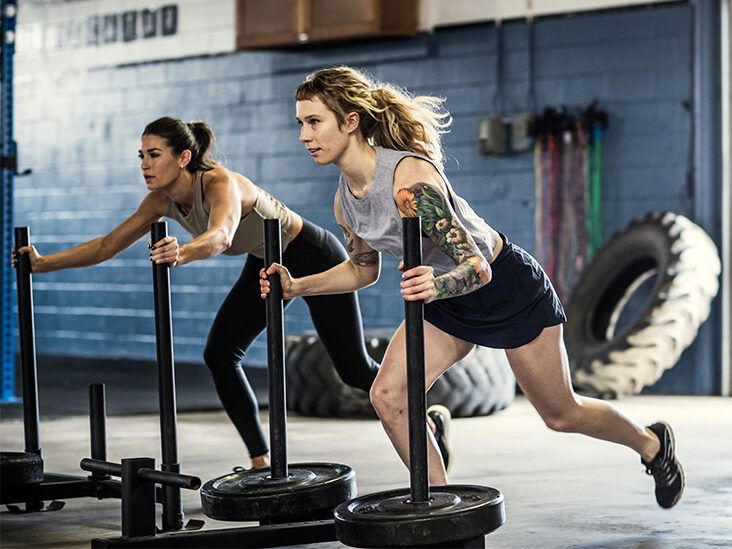
Try these progression methods:
- Reduce the time available to respond.
- Increase the number of possible movement directions.
- Add a second stimulus.
- Introduce a ball or other moving object.
- Combine lateral movement with sprinting.
- Perform drills after a short acceleration.
- Change the starting position.
- Use a partner who creates unpredictable movements.
- Reduce rest periods gradually.
- Add sport-specific movements.
For example, an athlete might begin with a simple left-or-right reaction drill. After mastering it, the athlete could progress to four possible directions. The next stage might combine direction changes with catching, passing, or sprinting.
This gradual progression allows the nervous system to adapt without turning every session into an exhausting test.
Common Mistakes That Slow Reaction-Time Progress
Many athletes assume that performing agility drills as quickly as possible automatically produces better results. However, excessive speed can create poor mechanics and reduce training quality.
One common mistake is focusing on foot speed while ignoring the initial decision. If the athlete moves quickly but chooses the wrong direction, the drill is not accomplishing its primary purpose.
Another problem is practicing only predictable patterns. Repeating the same ladder sequence or cone route eventually allows the athlete to memorize the movement. Although this may improve coordination, it does not challenge genuine reaction ability as effectively as unpredictable drills.
Poor recovery can also become an issue. Reaction-based training requires concentration. If an athlete is extremely fatigued, slower responses may reflect exhaustion rather than a lack of skill.
Finally, athletes should avoid sacrificing body control for speed. Fast movement is useful only when it can be stopped, redirected, or repeated safely.
Building Reaction Training Into a Weekly Routine
Reaction drills can be included two or three times per week depending on the athlete’s overall training schedule. They work particularly well after a warm-up because the athlete is prepared physically but not yet heavily fatigued.
A simple weekly structure could look like this:
Day 1: Reactive cone work, lateral movements, and short sprints.
Day 2: Rest or low-intensity recovery activity.
Day 3: Mirror drills, ball reactions, and directional changes.
Day 4: Strength or general conditioning.
Day 5: Sport-specific reactive drills and explosive movements.
The exact schedule should be adjusted according to training experience, sport demands, and recovery needs. Short, high-quality sessions are often more useful for reaction development than lengthy workouts performed without concentration.
Measuring Improvements in Reaction Ability
Tracking progress helps determine whether training is actually producing better responses. Athletes can record simple measurements such as sprint times, successful catches, directional accuracy, or the number of correct responses during a timed drill.

Reaction ability should not be judged only by raw speed. Accuracy matters too.
For example, an athlete who responds 10 percent faster but frequently moves in the wrong direction has not necessarily made meaningful progress. A better goal is to improve both response time and movement precision.
Consider tracking:
- Average response time
- Successful reactions
- Directional accuracy
- Short sprint performance
- Recovery between repetitions
- Quality of movement
- Ability to maintain technique under pressure
Consistent measurements can reveal improvements that may otherwise be difficult to notice during ordinary workouts.
Making Reaction Training More Sport-Specific
Different sports require different forms of quick response. A soccer player may need to react to an opponent’s movement while accelerating diagonally. A volleyball player may respond to a ball changing direction at close range. A basketball player often needs rapid lateral reactions combined with stopping and jumping.
Therefore, reaction training should eventually reflect the athlete’s actual sporting environment.
A thespoonathletic workout can be adapted by changing the direction, movement pattern, equipment, and stimulus according to the sport. The closer the drill resembles real competition, the more transferable the skill can become.
For recreational athletes, the same principle applies. Everyday activities such as hiking, recreational games, dancing, or court sports can benefit from better balance, coordination, and responsiveness.
Safety and Recovery During Agility Training
Agility exercises involve rapid acceleration and deceleration, so proper preparation is essential. Begin with several minutes of light movement followed by dynamic exercises that prepare the ankles, knees, hips, and shoulders.
Use an appropriate training surface and footwear. Keep enough space between athletes, cones, walls, and other obstacles to reduce unnecessary risks.
Recovery is equally important. Give yourself enough time between demanding sets to maintain good movement quality. If technique becomes noticeably worse, increase the rest period rather than forcing additional repetitions.
Hydration, adequate sleep, balanced nutrition, and strength training can also support consistent athletic performance. Reaction training should complement a complete fitness program rather than replace foundational conditioning.
Conclusion
Faster reaction time is not simply about having quick feet. It involves the ability to recognize information, make a decision, control the body, and execute movement efficiently. Agility training brings these qualities together by challenging athletes to respond to changing situations instead of following predictable movement patterns. The most effective programs combine short reactive drills, directional changes, acceleration, balance, coordination, and decision-making. Starting with simple exercises such as cone shuffles and ball drops provides a foundation before progressing toward unpredictable partner drills and sport-specific movements.