


A powerful vertical jump is more than simply getting higher off the ground. It reflects an athlete’s ability to produce force quickly, coordinate multiple muscle groups, and control the body during explosive movement. Basketball players need vertical power for rebounds and blocks, volleyball athletes rely on it for attacking and blocking, while track and field competitors can benefit from stronger lower-body explosiveness. Even athletes in sports that do not regularly require jumping can gain advantages from improved acceleration and reactive strength.
Increasing jump height requires a combination of strength, speed, mobility, technique, and recovery. Randomly performing dozens of jumps each day is unlikely to deliver consistent improvement and may place unnecessary stress on the knees and ankles. A structured approach is more effective because it gradually develops the physical qualities behind explosive performance. The training principles associated with thespoonathletic emphasize purposeful movement, progressive development, and athletic conditioning rather than simply chasing maximum jump height during every session.
The Key Physical Qualities Behind a Higher Jump
Vertical jumping depends on how effectively the body produces and transfers force. The hips, thighs, calves, ankles, and core all contribute to the movement. Strong muscles provide the foundation, but strength alone does not guarantee an impressive jump. Athletes must also learn to express that strength rapidly.
Several qualities deserve attention when designing a jump-focused program:
- Lower-body strength for producing force against the ground
- Explosive power for applying force quickly
- Elasticity for efficient stretch-shortening movements
- Core stability for transferring force through the body
- Mobility for maintaining effective jumping positions
- Coordination for synchronizing the arms, hips, knees, and ankles
- Landing control for safely absorbing force
The most successful programs combine these qualities instead of treating jumping as an isolated skill. This balanced approach can help athletes become more explosive while also improving overall movement efficiency.
Build a Strength Foundation Before Chasing Maximum Height
Strength training is an important component of vertical jump development because stronger muscles can create greater force when properly trained for speed. Exercises such as squats, split squats, lunges, Romanian deadlifts, and step-ups can strengthen the major muscles involved in jumping.
However, strength work should be appropriate for the athlete’s training age and experience. Beginners should first master movement patterns with controlled technique before adding significant resistance. More experienced athletes can gradually introduce heavier loads while maintaining good form.
Effective Strength Exercises for Jump Development
A useful lower-body strength session might include:
- Squats for overall leg and hip strength
- Romanian deadlifts for the posterior chain
- Bulgarian split squats for unilateral strength
- Calf raises for ankle and lower-leg development
- Step-ups for single-leg force production
- Glute bridges for hip extension
The goal is not to become exhausted after every workout. Instead, strength training should create a foundation that supports explosive work. As strength improves, athletes can transition toward exercises that teach the body to use that force rapidly.
Use Plyometric Training to Develop Explosive Power
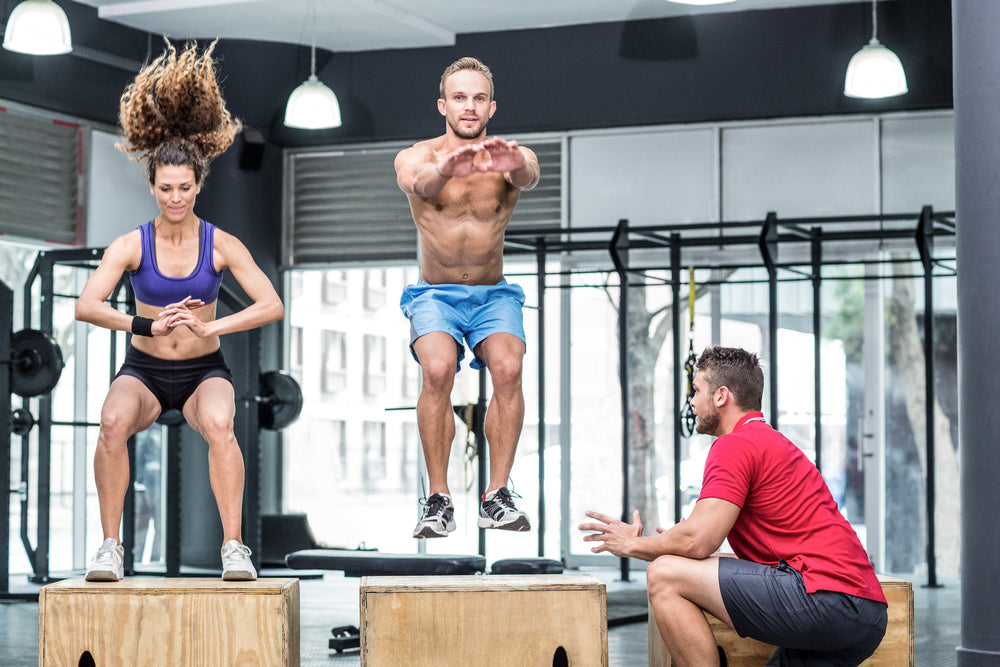
Plyometrics are among the most recognizable methods for improving jumping ability. These exercises teach athletes to move quickly from a loading phase into an explosive action. Jump squats, countermovement jumps, box jumps, bounds, and pogo jumps can all develop different aspects of reactive power.

Quality matters more than quantity. Performing a small number of technically strong jumps with adequate rest is generally more useful than repeatedly jumping until fatigue destroys movement quality. When tired, athletes may lose proper landing mechanics and reduce the explosiveness that makes plyometrics effective.
A practical progression can begin with simple movements before advancing to more demanding variations. For example, an athlete might start with controlled squat jumps, progress to repeated jumps, and eventually introduce more reactive drills. The training philosophy of thespoonathletic can be applied by treating every repetition as an opportunity to improve movement quality rather than simply accumulating volume.
Improve Your Jumping Technique
Physical strength cannot reach its full potential if jumping mechanics are inefficient. Technique influences how effectively an athlete transfers force from the ground through the legs and hips.
During a countermovement jump, athletes typically lower the body before rapidly extending the ankles, knees, and hips. The arms can contribute additional momentum when coordinated correctly. A rushed or poorly timed movement can reduce takeoff efficiency even when the athlete possesses considerable strength.
Technical Points to Practice
Focus on these details during training:
- Begin with a stable athletic stance.
- Use a controlled countermovement rather than dropping excessively low.
- Keep the torso controlled during the loading phase.
- Drive through the ground aggressively.
- Coordinate the arm swing with the leg extension.
- Finish the takeoff explosively.
- Practice controlled landings with balanced knee and hip positions.
Video analysis can also help athletes identify unnecessary movements or inconsistencies. Small technical improvements can sometimes produce noticeable gains without requiring dramatically more training volume.
Train the Posterior Chain for Greater Takeoff Power
The muscles along the back of the body play an important role in explosive athletic movement. The glutes, hamstrings, calves, and lower-back muscles contribute to hip extension and force production. If these areas are underdeveloped, an athlete may struggle to generate enough power during takeoff.
Exercises such as hip thrusts, Romanian deadlifts, kettlebell swings, and controlled single-leg movements can strengthen this chain. Sprinting and bounding drills can also teach the body to use these muscles dynamically.
The key is balance. Athletes should not neglect the quadriceps or lower-leg muscles while emphasizing the posterior chain. A well-rounded program develops the entire lower body while maintaining appropriate core control.
Develop Ankle and Calf Reactivity
Jumping does not end at the hips and knees. The ankles contribute significantly during the final phase of takeoff. Strong and reactive calves can help athletes transfer force efficiently into the ground and respond quickly during repeated jumping actions.
Pogo jumps, ankle hops, calf raises, and low-level skipping drills can be useful additions. These movements should generally be introduced gradually because the Achilles tendon, feet, and lower legs experience repeated loading during reactive exercises.
Athletes should pay attention to how their feet contact the ground. Excessive collapsing through the foot or uncontrolled ankle movement may reduce efficiency. Building lower-leg strength alongside sound technique creates a stronger foundation for advanced plyometric training.
Train Explosiveness Without Creating Excessive Fatigue
One common mistake in jump training is assuming that more work automatically means faster improvement. Explosive training is different from traditional endurance training. The objective is to produce high-quality movement at high speed.
If an athlete performs too many jumps in one session, fatigue can reduce force production and compromise landing mechanics. A better approach is to keep explosive sets relatively short and allow sufficient recovery between demanding efforts.
A weekly schedule might include:
| Training Focus | Example Exercises | Suggested Priority |
|---|---|---|
| Strength | Squats, split squats, deadlifts | High |
| Explosiveness | Jump squats, broad jumps | High |
| Reactive ability | Pogo jumps, bounds | Moderate |
| Technique | Countermovement jumps | High |
| Mobility | Hip and ankle drills | Moderate |
| Recovery | Rest, walking, light mobility | Essential |
The exact workload should depend on training experience, sport demands, schedule, and recovery capacity.
Combine Jump Training With Sprint Work
Sprinting and jumping share several important characteristics. Both require rapid force production, coordinated lower-body movement, and strong ground contact. Adding short sprint efforts to a jump-focused program can therefore complement explosive development.
Acceleration drills, short hill sprints, and controlled maximal-effort runs can challenge the muscles differently from vertical jumps. They also provide athletes with an opportunity to develop horizontal force production.
However, sprinting should not simply be added on top of an already demanding program without considering total workload. Athletes should organize high-intensity sessions carefully and avoid stacking several intense lower-body workouts on consecutive days.
Use Mobility to Improve Jump Mechanics
Mobility does not directly guarantee a higher vertical jump, but restricted movement can interfere with effective technique. Athletes need sufficient ankle, hip, and lower-body mobility to reach strong positions during loading and landing.
Useful mobility work may include ankle dorsiflexion drills, hip flexor stretches, dynamic hamstring movements, and controlled squat patterns. Dynamic movements are particularly useful before training because they prepare the body for activity without making the athlete feel sluggish.
The objective is functional mobility rather than extreme flexibility. Athletes should be able to move through the ranges required by their sport while maintaining control and stability.
Prioritize Landing Mechanics
A higher jump is valuable only when an athlete can land safely and efficiently. Landing drills should therefore be part of jump development from the beginning.
Athletes can practice dropping from low heights, landing softly, and maintaining alignment through the hips, knees, and feet. The goal is to absorb force progressively rather than allowing the knees or ankles to collapse uncontrolled.
Strong landing mechanics can also improve confidence. When athletes know how to control their body during takeoff and landing, they can perform explosive movements with greater consistency.
Create a Progressive Training Schedule
A good vertical jump program should evolve over time. Beginners may need more emphasis on strength, mobility, coordination, and landing technique. Intermediate athletes can increase plyometric complexity and introduce greater reactive demands. Advanced athletes may focus on maximizing power while carefully managing training volume.
A simple progression could look like this:
Phase 1: Foundation
Build strength, mobility, balance, and movement control.
Phase 2: Power Development
Introduce structured jumps, bounds, and explosive strength exercises.
Phase 3: Reactive Training
Add faster ground contacts and more advanced plyometric movements.
Phase 4: Performance
Combine strength, sprinting, jumping, and sport-specific drills while reducing unnecessary volume.
This gradual approach reflects the practical training mindset promoted by thespoonathletic, where consistency and progression are more valuable than constantly testing maximum performance.
Recovery Is Part of Jump Training
Muscles and connective tissues need time to adapt after intense explosive training. Recovery should therefore be treated as part of the program rather than something athletes consider only when they feel exhausted.
Adequate sleep, nutritious meals, hydration, and sensible training spacing all support adaptation. Athletes should also pay attention to persistent soreness or declining performance. A sudden drop in jump height can indicate that the body needs additional recovery.
Useful recovery habits include:
- Getting consistent sleep
- Eating sufficient protein and carbohydrates
- Staying hydrated throughout the day
- Using low-intensity movement on recovery days
- Avoiding unnecessary high-impact sessions
- Adjusting training when fatigue becomes excessive
Measure Progress Beyond Maximum Jump Height
Testing vertical jump height is useful, but it should not be the only measurement. Athletes can also track consistency, takeoff speed, landing control, strength numbers, sprint performance, and perceived effort.
Testing every day can become counterproductive because daily performance naturally fluctuates. A better approach is to test periodically under similar conditions. This provides a clearer picture of long-term progress.
Keep a simple training record containing exercise selection, sets, repetitions, jump measurements, and recovery notes. Over several weeks, patterns can become easier to identify. If performance improves while fatigue remains manageable, the program is likely progressing effectively.
Common Mistakes That Limit Jump Progress
Athletes often make avoidable errors when trying to increase their vertical jump. One of the most common is performing high-volume jumping without developing adequate strength. Another is using advanced plyometric exercises before mastering basic landing and takeoff mechanics.
Other mistakes include:
- Training explosively while severely fatigued
- Ignoring ankle and hip mobility
- Neglecting single-leg strength
- Changing programs too frequently
- Testing maximum jumps too often
- Skipping recovery days
- Treating technique as less important than effort
Correcting these issues can make training more productive without requiring complicated equipment or extremely long sessions.
How thespoonathletic Training Principles Support Athletic Development
The broader value of thespoonathletic-style training methods lies in combining several components rather than relying on a single exercise. Strength creates the force foundation, plyometrics improve rapid force application, mobility supports movement quality, and recovery allows adaptation.
Athletes should also remember that individual responses vary. Age, training history, body composition, sport, genetics, and recovery habits can influence how quickly vertical jump performance changes. A program that works exceptionally well for one athlete may need modifications for another.
The most useful strategy is therefore one that can be performed consistently and adjusted according to measurable progress. Athletes should build gradually, prioritize technique, and increase training demands only when the body is prepared for them.
Conclusion
Improving vertical jump height is a long-term athletic development project, not a quick challenge solved by performing hundreds of jumps. Strong legs, powerful hips, reactive ankles, efficient technique, good mobility, and disciplined recovery all contribute to better performance. A successful program should begin with movement quality and strength before progressively introducing more demanding explosive exercises. Athletes who combine structured strength work, plyometrics, sprinting, technical practice, and recovery can create a much stronger foundation for jumping performance.