


Explosive power can make the difference between reaching the ball first, jumping higher for a rebound, accelerating past an opponent, or producing a stronger finish. While traditional strength training develops the muscles needed for force production, plyometric training teaches the body to apply that force rapidly. It combines controlled loading with fast, powerful movements to improve the way muscles, tendons, and the nervous system work together.
For athletes, developing explosive ability is not simply about jumping as high as possible. Effective plyometric training involves movement quality, timing, landing control, coordination, and progressive intensity. With the right approach, athletes from different sporting backgrounds can use these exercises to improve acceleration, agility, jumping ability, and overall athletic performance. A practical training philosophy from thespoonathletic can help athletes understand how explosive exercises fit into a balanced sports-conditioning routine without turning every workout into a maximal-effort session.
What Is Plyometric Training?
Plyometric training uses quick, dynamic movements that involve a rapid transition from muscle lengthening to forceful muscle contraction. This action is commonly described through the stretch-shortening cycle. When an athlete lands from a jump, for example, the muscles and tendons absorb energy. A quick transition into the next movement allows that stored energy to contribute to a powerful takeoff.
Common plyometric exercises include:
- Squat jumps
- Box jumps
- Broad jumps
- Bounding
- Skater jumps
- Tuck jumps
- Medicine-ball throws
- Lateral hops
- Depth jumps
The objective is not simply to perform as many repetitions as possible. Quality matters more than quantity. Each repetition should be performed with control, appropriate posture, and enough recovery to maintain speed and power.
For beginners, low-impact variations can establish movement mechanics before more demanding drills are introduced. As athletes become more capable, exercises can gradually become faster, higher, longer, or more complex.
Why Explosive Power Matters in Sports
Many sporting movements occur in fractions of a second. An athlete may need to sprint into space, change direction, jump for a header, react to an opponent, or launch a throw without much preparation. Maximum strength is useful, but the ability to express strength quickly is equally important.
Plyometric work can support several athletic qualities:
| Athletic Quality | How Plyometric Training Can Help |
|---|---|
| Acceleration | Develops rapid force production during explosive starts |
| Jumping | Improves takeoff mechanics and lower-body explosiveness |
| Agility | Trains quick lateral and multidirectional movements |
| Coordination | Improves timing between the upper and lower body |
| Reaction ability | Encourages fast responses to movement demands |
| Elastic strength | Develops efficient use of the stretch-shortening cycle |
| Sport performance | Transfers explosive movement into game-specific actions |
The value of plyometrics becomes especially clear when training is connected to the demands of a particular sport. A basketball player may prioritize vertical jumping, while a tennis player could benefit more from lateral movement and single-leg power. A football player might combine acceleration drills with multidirectional jumps.
How Plyometrics Build Explosive Power
The Stretch-Shortening Cycle
The stretch-shortening cycle is one of the foundations of explosive movement. During the first phase, muscles and connective tissues experience a rapid lengthening action. This is followed by a short transition and then an explosive shortening action.
Consider a countermovement jump. The athlete quickly lowers the body before driving upward. That downward movement prepares the legs for a stronger upward action. Training this sequence repeatedly can improve the body’s ability to coordinate force efficiently.
The transition between these phases matters. If an athlete spends too long at the bottom of a movement, some of the elastic contribution can be reduced. This is why plyometric exercises generally emphasize quick, purposeful transitions rather than slow repetitions.
Training the Nervous System
Explosive power also depends on the nervous system’s ability to recruit muscles rapidly. Plyometric movements provide a stimulus that requires athletes to coordinate many muscles in a short period.
This can improve movement efficiency and help athletes become more comfortable producing force quickly. However, nervous-system training requires sufficient recovery. Performing high-intensity jumps every day can reduce movement quality and increase fatigue.
That is why thespoonathletic emphasizes the importance of treating plyometrics as performance training rather than ordinary conditioning. The goal should be powerful, technically sound repetitions instead of exhausting the athlete with excessive volume.
Best Plyometric Exercises for Athletes
Squat Jumps
Squat jumps are a straightforward introduction to explosive lower-body training. Start in an athletic stance, lower into a comfortable squat position, and drive upward. Land softly and regain control before repeating.
They can help beginners learn how to coordinate hip, knee, and ankle extension. Athletes should avoid collapsing inward at the knees during takeoff or landing.
Broad Jumps
Broad jumps emphasize horizontal power. From a balanced stance, swing the arms and drive through the legs to jump forward. Land with bent knees and maintain balance.
They are particularly useful for sports requiring forward acceleration, such as sprinting, football, and rugby.
Lateral Bounds
Lateral bounds train side-to-side power. Push from one leg and travel laterally toward the opposite side, landing under control before repeating.
Because many sports involve cutting and lateral movement, this exercise can complement forward-focused jumping drills.
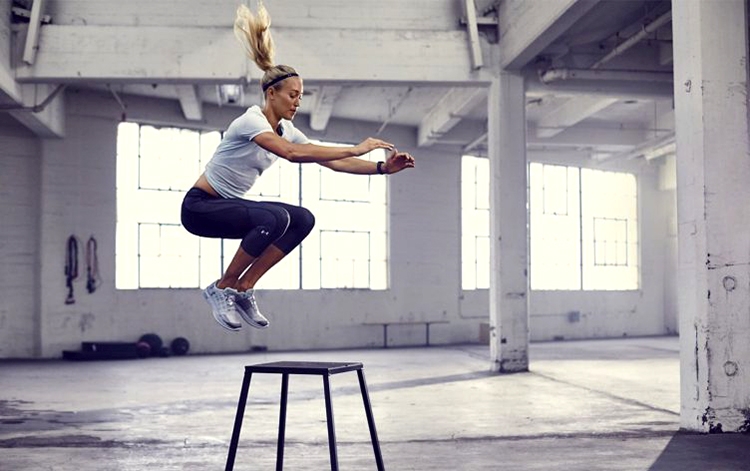
Box Jumps
Box jumps provide a powerful vertical movement while giving athletes a raised landing surface. The height should be appropriate for the athlete’s ability rather than selected simply to look impressive.
A stable landing is more valuable than an unnecessarily high box.
Medicine-Ball Throws
Plyometric training does not have to focus exclusively on the legs. Medicine-ball chest passes, overhead throws, rotational throws, and explosive slams can develop upper-body power.
Rotational throws can be particularly useful for athletes involved in throwing, striking, and rotational sports.
How to Start a Plyometric Training Program
Beginners should establish movement control before attempting advanced drills. Start with low-intensity exercises and focus on landing mechanics, posture, and rhythm.
A basic progression can look like this:
- Begin with controlled landing drills.
- Add low-impact hops.
- Introduce squat jumps and basic bounds.
- Progress toward broad and lateral jumps.
- Add sport-specific explosive movements.
- Introduce advanced exercises only after technique becomes consistent.
Training frequency should also remain reasonable. One or two dedicated plyometric sessions per week can provide a useful stimulus for many recreational athletes, while experienced athletes may incorporate carefully planned explosive drills into broader performance programs.

The appropriate volume depends on training age, sport, current fitness, and recovery capacity. More repetitions are not automatically better. Once jump height, distance, coordination, or landing quality noticeably declines, the session may have moved beyond productive power training.
Landing Technique Is Just as Important as Jumping
Athletes often concentrate on how high or far they can jump and overlook what happens when they return to the ground. Good landing mechanics are essential because landing represents a significant force-absorption demand.
A controlled landing generally involves:
- A stable trunk
- Softly bent hips and knees
- Balanced foot placement
- Knees tracking appropriately over the feet
- Controlled deceleration
- Immediate recovery of athletic posture
Athletes should avoid repeatedly landing stiffly or losing balance. Coaches can begin with simple landing exercises and gradually increase complexity.
thespoonathletic encourages a performance mindset in which every repetition has a purpose. A technically strong jump followed by a controlled landing is more valuable than a dramatic jump performed with poor mechanics.
Combining Plyometrics with Strength Training
Plyometrics and resistance training can complement each other. Strength training develops the capacity to produce force, while explosive exercises help athletes express that force rapidly.
A balanced weekly program might include:
Strength Days
Focus on movements such as squats, lunges, presses, rows, and hip-dominant exercises. The exact exercises should reflect the athlete’s experience and sporting demands.
Power Days
Use a small selection of jumps, bounds, throws, or explosive movements. Keep repetitions relatively low and emphasize maximum-quality execution.
Sport-Specific Days
Connect physical qualities to actual sporting movements. A basketball athlete could combine jumping with rebounding drills, while a tennis player might use lateral bounds before directional court movements.
This combination creates a broader training system instead of treating explosive power as an isolated fitness quality.
Common Plyometric Training Mistakes
Doing Too Much Too Soon
Advanced exercises such as depth jumps can place substantial demands on the body. Beginners should not rush toward them simply because they appear more athletic.
Ignoring Recovery
Power training requires freshness. If every session becomes a conditioning workout, explosive output may decline.
Chasing Height Instead of Technique
A higher jump is not automatically a better repetition. Athletes should prioritize controlled takeoff, efficient movement, and stable landing.
Using Random Exercises
A collection of difficult jumps does not automatically create a good program. Exercises should have a clear connection to the athlete’s goals.
Neglecting Warm-Up
Explosive movements should follow an appropriate preparation period. Dynamic mobility, light movement, and gradual activation can help athletes transition into high-speed work.
Making Plyometric Training Sport-Specific
Different sports require different expressions of power. This makes exercise selection particularly important.
For basketball, vertical jumps, repeated takeoffs, and lateral movements can be valuable. Soccer players may benefit from acceleration-focused bounds and multidirectional drills. Volleyball athletes can emphasize vertical explosiveness. Tennis players need quick lateral reactions and single-leg control. Track athletes may use carefully selected jumps to complement sprint and strength work.
The goal is to identify where explosive power appears in the sport and train a related movement pattern. thespoonathletic provides a useful framework for thinking about athletic development as a combination of strength, speed, coordination, mobility, and recovery rather than relying on one exercise category.
How to Improve Results Over Time
Progressive overload in plyometrics does not always mean adding more repetitions. Athletes can progress by increasing movement complexity, speed, distance, direction, or exercise difficulty.
For example, a progression could move from:
Two-leg landing → pogo hops → squat jumps → broad jumps → single-leg bounds → reactive multidirectional drills
Progress should be gradual. Athletes should only advance when they can consistently perform the current movement with sound mechanics.
Keeping a simple training record can also help. Track jump quality, number of sets, repetitions, perceived effort, and recovery between sessions. If performance continually drops, the athlete may need more rest rather than additional workload.
Recovery and Nutrition Support Explosive Training
Power development does not happen only during workouts. Recovery gives the body an opportunity to adapt to training stress.
Important habits include:
- Getting consistent, adequate sleep
- Eating balanced meals with sufficient protein and carbohydrates
- Staying hydrated
- Scheduling recovery between demanding sessions
- Managing total weekly training load
- Using lighter sessions when fatigue accumulates
Nutrition should support the demands of the athlete’s overall training program. A poorly fueled athlete may struggle to produce the high-quality effort required for explosive movements.
Recovery is particularly important when combining plyometrics with sprinting, heavy strength training, or frequent sports practice.
A Smarter Approach to Explosive Athletic Performance
The most effective plyometric program is not necessarily the hardest one. It is the one that matches the athlete’s current abilities and develops the qualities required by their sport.
Start with fundamentals, master landing mechanics, develop basic jumping ability, and then introduce more advanced variations. Keep explosive sessions focused and allow enough recovery to maintain movement quality.
Athletes should also evaluate progress beyond simple jump height. Faster acceleration, sharper direction changes, better coordination, improved balance, and stronger sport-specific movements can all indicate meaningful development.
With this approach, thespoonathletic can serve as a conceptual guide for athletes looking to make plyometric training a purposeful part of their performance routine rather than simply adding more jumping exercises to a workout.
Conclusion
Explosive power is a combination of strength, speed, coordination, timing, and efficient movement. Plyometric training helps athletes bridge the gap between producing force and applying that force quickly. When properly programmed, exercises such as squat jumps, broad jumps, lateral bounds, box jumps, and medicine-ball throws can support athletic qualities that matter across numerous sports. The key is quality over quantity. Athletes should progress gradually, prioritize landing control, choose exercises according to sporting demands, and respect recovery. Plyometrics work best as part of a complete performance program that includes strength training, sport practice, mobility, nutrition, and rest.